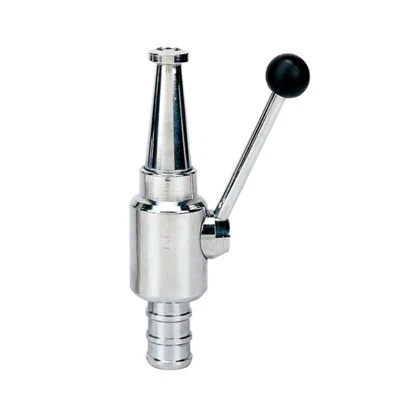
Hey there! As a supplier of Fire Hydrant Landing Valves, I'm super stoked to share with you all the nitty - gritty details about the main components of these essential firefighting tools.
Let's start with the valve body. This is the heart of the Fire Hydrant Landing Valve. It's like the main frame of a house, providing the structure and housing for all the other parts. The valve body is usually made from high - quality materials like brass. Brass is a great choice because it's durable, resistant to corrosion, and can handle high water pressures. Our Fire Brass Landing Valve is a prime example of a valve with a top - notch brass body. It can stand up to the tough conditions in a fire - fighting situation, ensuring long - term reliability.
Next up is the valve disc. The valve disc is what controls the flow of water through the valve. When the valve is opened, the disc moves out of the way, allowing water to pass through. When it's closed, the disc seals against the valve seat, stopping the water flow. It's a simple yet crucial component. A well - designed valve disc should be able to open and close smoothly, and form a tight seal to prevent any leaks. Our valves are engineered to have precise valve discs that work efficiently, so you can count on them when it matters most.
The valve stem is another important part. It connects the valve disc to the operating mechanism. When you turn the handle of the Fire Hydrant Landing Valve, the valve stem moves the valve disc up or down. The stem needs to be strong and sturdy to withstand the force applied during operation. We use high - strength materials for our valve stems to ensure they don't break or bend under pressure.
The packing is a small but vital component. It's located around the valve stem to prevent water from leaking out along the stem. The packing material is usually made of something like graphite or rubber. A good packing will create a tight seal, but also allow the valve stem to move freely. If the packing isn't working properly, you might end up with water leaking from the valve, which can be a real headache.
Now, let's talk about the handle. The handle is how you operate the valve. It's designed to be easy to grip and turn, even in an emergency situation. You don't want to be struggling to open or close the valve when there's a fire. Our handles are ergonomically designed for maximum comfort and ease of use. Whether you're a professional firefighter or someone using the valve in a building, you'll find our handles very user - friendly.
The inlet and outlet connections are also key. These are where the valve connects to the fire hydrant and the fire hose. The connections need to be secure and leak - proof. We offer a variety of connection types to suit different needs. For example, our Durable Brass Fire Hose Angle Valve has well - designed inlet and outlet connections that ensure a tight fit with the hose and hydrant.


Some Fire Hydrant Landing Valves also come with an adapter. An adapter can be very useful if you need to connect different types of hoses or if you want to change the connection size. Our Fire Hose Reel Landing Valve With Adapter Brass is a great option for those who need this kind of flexibility.
In addition to these main components, there are also some other features that can enhance the performance of the Fire Hydrant Landing Valve. For example, some valves have a pressure gauge. This allows you to monitor the water pressure inside the valve, which can be very important in a fire - fighting situation. You can adjust the valve accordingly to ensure the right amount of water is flowing.
Another feature is the locking mechanism. A locking mechanism can prevent the valve from being accidentally opened or closed. This is especially important in public areas or buildings where unauthorized access could be a problem.
We take pride in the quality of our Fire Hydrant Landing Valves. Each component is carefully selected and tested to meet the highest standards. We know that in a fire - fighting situation, every second counts, and our valves are designed to perform flawlessly when you need them most.
If you're in the market for Fire Hydrant Landing Valves, whether you're a fire department, a building owner, or a contractor, we'd love to talk to you. We can provide you with detailed information about our products, answer any questions you might have, and help you find the right valve for your specific needs. Don't hesitate to reach out and start a conversation about your procurement requirements.
References:
- Fire Protection Handbook, National Fire Protection Association
- Engineering Principles of Fire Protection Systems, John Wiley & Sons