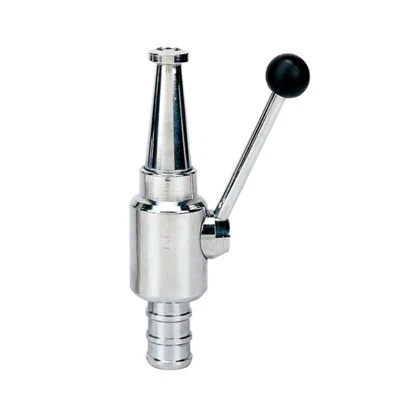
Hey there! As a supplier of Foam Inductors, I've seen firsthand how the dynamic flow change can have a big impact on these important firefighting tools. So, let's dive right in and explore how these changes affect our trusty Foam Inductors.
Understanding Dynamic Flow Change
First off, what exactly is dynamic flow change? Well, it's all about the variations in the flow rate of the water or other fluid passing through the system. In the context of a Foam Inductor, this flow can change due to a bunch of reasons. For example, the pressure from the water source might fluctuate, or the opening and closing of valves can alter the flow.


When the flow rate changes, it directly affects how the Foam Inductor works. You see, a Foam Inductor is designed to mix foam concentrate with water at a specific ratio to create an effective firefighting foam. But if the flow rate isn't stable, this mixing process can get all messed up.
How Flow Changes Affect Mixing Ratio
One of the most critical aspects of a Foam Inductor is maintaining the correct mixing ratio of foam concentrate to water. A proper ratio ensures that the foam has the right properties to extinguish fires efficiently.
Let's say the flow rate suddenly increases. If the Foam Inductor isn't designed to handle this change, the amount of foam concentrate drawn into the water might not increase proportionally. This means that the resulting foam will have a lower concentration of the active ingredients, making it less effective at suppressing fires.
On the other hand, if the flow rate decreases, the Foam Inductor might draw in too much foam concentrate relative to the amount of water. This can lead to a foam that's too thick and might not spread as easily over the fire. It could also waste the expensive foam concentrate.
Impact on Foam Quality
The quality of the foam produced by the Foam Inductor is directly related to the dynamic flow. A stable flow helps in creating a consistent and high - quality foam. When the flow is erratic, the foam structure can be affected.
Good - quality foam has a fine and uniform bubble structure. This structure allows the foam to cover the fire area effectively, smothering the flames and preventing oxygen from reaching the fuel. But when the flow changes, the bubble size can become inconsistent. Larger bubbles might form, which don't provide as good a seal over the fire, reducing the foam's effectiveness.
Pressure and Flow Relationship
The pressure in the system is closely related to the flow rate. An increase in pressure usually leads to an increase in flow, and vice versa. In a Foam Inductor, the pressure affects how the foam concentrate is drawn into the water stream.
If the pressure is too high, it can cause the Foam Inductor to draw in too much or too little foam concentrate. High pressure might also cause the foam to be ejected from the nozzle at a higher velocity, which can break up the foam bubbles and reduce its quality.
On the other hand, low pressure might not provide enough force to draw in the foam concentrate properly. This can result in a weak foam that doesn't have the necessary properties to fight fires effectively.
Real - World Scenarios
In real - world firefighting situations, dynamic flow changes are quite common. For example, when multiple fire hoses are connected to the same water source, the flow rate to each hose can vary depending on how many hoses are in use and how they are being used.
Imagine a large industrial fire where several firefighters are using Foam Inductors simultaneously. If one firefighter suddenly shuts off their hose, the flow rate and pressure in the system can change, affecting the performance of the other Foam Inductors. This is why it's crucial to have Foam Inductors that can adapt to these changes.
Our Solutions as a Supplier
As a Foam Inductor supplier, we understand these challenges. That's why we've designed our Foam Inductors to be as adaptable as possible. Our products are built with advanced technology that can adjust to different flow rates and pressures.
We also offer a range of accessories that can help in maintaining a stable flow. For example, our Spray/Jet Nozzle With Lever Control allows firefighters to easily control the flow and pattern of the water and foam mixture. This gives them more control over the firefighting process and helps in compensating for any flow changes.
Another great product is our Jet /Spray BS Switch Fire Branchpipe. It's designed to provide a consistent flow and can be easily switched between different spray patterns, depending on the needs of the fire.
And let's not forget our Fire Fighting Jet / Spray Nozzle. This nozzle is built to handle different flow rates and can produce a high - quality foam even under varying conditions.
Importance of Regular Maintenance
To ensure that your Foam Inductors work effectively in the face of dynamic flow changes, regular maintenance is key. You need to check the inductor for any clogs or damage that could affect the flow. Also, make sure that the foam concentrate is stored properly and is at the right level.
Regular testing of the Foam Inductor can also help in identifying any issues early on. This way, you can make the necessary adjustments and keep your firefighting equipment in top condition.
Wrapping It Up
In conclusion, dynamic flow change can have a significant impact on the performance of Foam Inductors. It can affect the mixing ratio, foam quality, and overall effectiveness of the firefighting operation. But with the right products and proper maintenance, you can overcome these challenges.
If you're in the market for high - quality Foam Inductors and related accessories, we're here to help. Our products are designed to handle the toughest firefighting situations and adapt to dynamic flow changes. So, if you're interested in learning more or making a purchase, don't hesitate to reach out. Let's work together to ensure your firefighting needs are met!
References
- Fire Protection Handbook, National Fire Protection Association
- Firefighting Equipment Manuals, Industry Standards Publications