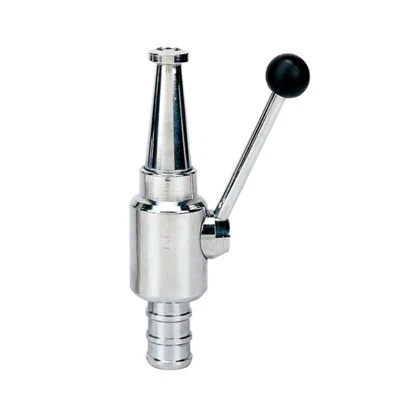
As a supplier of hydrant valves, I often encounter inquiries from customers regarding the compatibility of hydrant valves with water meters. This topic is not only relevant for professionals in the fire - fighting and water management industries but also for those responsible for ensuring the proper functioning of water supply systems. In this blog, I will delve into the details of whether a hydrant valve can be used with a water meter, the associated considerations, and the benefits of such a combination.
Understanding Hydrant Valves and Water Meters
Hydrant Valves
Hydrant valves are essential components in fire - fighting and water distribution systems. They are designed to control the flow of water from a water source, such as a municipal water main or a storage tank, to fire hydrants or other water - using equipment. There are different types of hydrant valves, including Fire Hydrant Landing Valve, which are typically used in multi - story buildings to provide a reliable water supply for fire - fighting operations on different floors, and Hydrant Valve, which are more commonly used in outdoor settings for general water access.
Water Meters
Water meters are devices used to measure the volume of water that passes through a pipe. They are crucial for billing purposes, water conservation, and monitoring water usage patterns. Water meters can be classified into different types, such as mechanical meters, ultrasonic meters, and electromagnetic meters, each with its own working principle and accuracy level.
Compatibility of Hydrant Valves and Water Meters
The short answer is yes, a hydrant valve can be used with a water meter. However, several factors need to be considered to ensure a proper and efficient combination.


Flow Rate
One of the primary considerations is the flow rate. Hydrant valves are designed to handle high - volume water flow, especially during fire - fighting situations. Water meters, on the other hand, are calibrated to measure water flow within a specific range. If the flow rate through the hydrant valve exceeds the maximum flow rate that the water meter can accurately measure, it can lead to inaccurate readings. Therefore, it is essential to select a water meter with a sufficient flow capacity to match the expected flow rate of the hydrant valve.
Pressure
Another important factor is pressure. Hydrant valves are often used in systems with relatively high water pressure, especially in fire - fighting applications. Water meters also have a pressure rating, and if the pressure in the system exceeds the rated pressure of the water meter, it can cause damage to the meter and affect its accuracy. In some cases, a Pressure Regulating Valve may be required to reduce the pressure before the water reaches the water meter.
Installation Location
The installation location of the hydrant valve and the water meter is also crucial. The water meter should be installed in a location where it is easily accessible for reading and maintenance. It should also be installed in a straight section of the pipe to ensure accurate flow measurement. Additionally, the hydrant valve and the water meter should be installed in a way that minimizes the risk of damage from external factors, such as physical impact or environmental conditions.
Benefits of Using a Hydrant Valve with a Water Meter
Water Management
Using a hydrant valve with a water meter allows for better water management. By accurately measuring the water usage through the hydrant valve, it becomes possible to monitor and control water consumption. This is particularly important in areas where water is a scarce resource or in facilities where water costs are a significant concern.
Billing and Accountability
For commercial and industrial users, a water meter installed with a hydrant valve provides an accurate basis for billing. It ensures that users are charged according to their actual water usage, promoting fairness and accountability.
System Monitoring
The combination of a hydrant valve and a water meter can also be used for system monitoring. By analyzing the water flow data, it is possible to detect leaks, abnormal usage patterns, or potential problems in the water supply system. This early detection can help prevent water loss and costly repairs.
Considerations for Installation and Maintenance
Installation
When installing a hydrant valve and a water meter together, it is important to follow the manufacturer's instructions and relevant industry standards. Proper installation includes ensuring correct pipe sizing, proper alignment, and secure connections. It is also advisable to have a professional installer carry out the installation to ensure the safety and efficiency of the system.
Maintenance
Regular maintenance is essential to ensure the proper functioning of both the hydrant valve and the water meter. This includes inspecting for leaks, checking the accuracy of the water meter, and lubricating the moving parts of the hydrant valve. Maintenance schedules should be established based on the manufacturer's recommendations and the specific usage conditions of the system.
Conclusion
In conclusion, a hydrant valve can be used with a water meter, but careful consideration must be given to factors such as flow rate, pressure, and installation location. The combination offers several benefits, including better water management, accurate billing, and system monitoring. As a supplier of hydrant valves, we are committed to providing high - quality products and technical support to ensure that our customers can achieve a reliable and efficient water supply system.
If you are interested in purchasing hydrant valves or have any questions regarding the compatibility of hydrant valves with water meters, please feel free to contact us for more information and to discuss your specific requirements. We look forward to working with you to meet your fire - fighting and water management needs.
References
- "Water Meter Handbook" by the American Water Works Association.
- Manufacturer's manuals for hydrant valves and water meters.