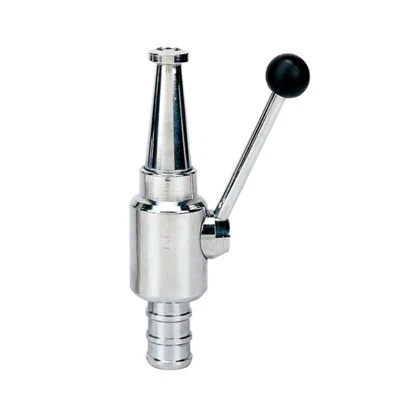
As a professional foam nozzle supplier, I've had the privilege of working closely with various types of foam nozzles in the fire - fighting industry. One of the most common questions I encounter from customers is about the difference between low - expansion and high - expansion foam nozzles. In this blog, I'll delve into the details of these two types of foam nozzles to help you understand their unique features, applications, and advantages.
Basic Principles of Foam Nozzles
Before we explore the differences, it's essential to understand the basic principle of foam nozzles. Foam nozzles are crucial components in fire - fighting systems. They are designed to mix water, foam concentrate, and air to produce a foam that can effectively suppress fires. The foam acts as a barrier, preventing oxygen from reaching the fuel source and cooling the fire area.
Low - Expansion Foam Nozzles
Low - expansion foam nozzles typically produce foam with an expansion ratio ranging from 2:1 to 20:1. This means that for every unit volume of foam solution, the resulting foam volume is between 2 and 20 times larger.
Construction and Design
Low - expansion foam nozzles are generally more compact and simpler in design compared to high - expansion ones. They are often made of durable materials such as brass or stainless steel to withstand the high - pressure water flow. The internal structure of a low - expansion foam nozzle is designed to create a turbulent flow that effectively mixes the water, foam concentrate, and air.
Foam Characteristics
The foam produced by low - expansion foam nozzles is relatively dense and stable. It has a high viscosity, which allows it to adhere well to vertical surfaces. This characteristic makes it ideal for fighting fires involving flammable liquids, such as gasoline, oil, and solvents. The dense foam can quickly form a seal over the surface of the burning liquid, preventing the release of flammable vapors and extinguishing the fire.
Applications
Low - expansion foam nozzles are widely used in industrial settings, such as refineries, chemical plants, and oil storage facilities. They are also commonly found in fire trucks and other mobile fire - fighting equipment. In addition, they can be used in small - scale fire - fighting scenarios, such as in workshops or garages. For example, in a refinery, low - expansion foam nozzles can be used to quickly suppress a spill fire of crude oil or other petroleum products.
You can find more information about related fire - fighting accessories like Fire Hydrant Nozzle on our website.
High - Expansion Foam Nozzles
High - expansion foam nozzles, on the other hand, produce foam with an expansion ratio of 200:1 to 1000:1 or even higher. This means that a small amount of foam solution can generate a large volume of foam.
Construction and Design
High - expansion foam nozzles are more complex in design. They usually consist of a large - diameter housing with multiple air inlets and a special foam - generating element. The design is optimized to draw in a large amount of air and mix it with the foam solution to achieve a high expansion ratio.
Foam Characteristics
The foam produced by high - expansion foam nozzles is very light and fluffy. It has a low density and can quickly fill large spaces. The high - expansion foam has excellent insulating properties, which can effectively reduce the heat transfer from the fire area. It can also displace oxygen in the enclosed space, smothering the fire.
Applications
High - expansion foam nozzles are mainly used in large - scale, enclosed spaces such as warehouses, aircraft hangars, and underground mines. In a warehouse, for example, a high - expansion foam system can quickly fill the entire space with foam, extinguishing fires involving stored goods such as paper, textiles, or plastics. The ability of high - expansion foam to fill large volumes makes it a cost - effective solution for protecting large areas.
If you are interested in other types of nozzles, you can check out our Spray Jet Nozzle and Foam Inductor on our website.
Key Differences
Expansion Ratio
The most obvious difference between low - expansion and high - expansion foam nozzles is the expansion ratio. As mentioned earlier, low - expansion foam nozzles have an expansion ratio of 2:1 to 20:1, while high - expansion foam nozzles can achieve ratios of 200:1 to 1000:1 or more. This difference in expansion ratio leads to significant variations in the volume and density of the foam produced.
Foam Density and Stability
Low - expansion foam is denser and more stable, which makes it suitable for adhering to surfaces and suppressing liquid fires. High - expansion foam, on the other hand, is lighter and less stable but can quickly fill large spaces.
Application Scenarios
Low - expansion foam nozzles are typically used for fighting fires involving flammable liquids in industrial and mobile fire - fighting applications. High - expansion foam nozzles are more suitable for large - scale, enclosed spaces where filling the area with foam is the primary goal.
Design and Complexity
Low - expansion foam nozzles are generally simpler in design and more compact, while high - expansion foam nozzles are more complex and larger in size.


Choosing the Right Foam Nozzle
When choosing between a low - expansion and a high - expansion foam nozzle, several factors need to be considered.
Fire Type
If you are dealing with a fire involving flammable liquids, a low - expansion foam nozzle is usually the better choice. For fires in large, enclosed spaces with solid combustibles, a high - expansion foam nozzle may be more appropriate.
Space and Area
The size of the area to be protected is an important factor. For small areas or areas with complex geometries, low - expansion foam nozzles may be more practical. For large, open - plan or enclosed spaces, high - expansion foam nozzles can provide more comprehensive fire protection.
System Compatibility
The foam nozzle you choose must be compatible with your existing fire - fighting system, including the water supply, foam concentrate, and other components.
Conclusion
In conclusion, both low - expansion and high - expansion foam nozzles play important roles in fire - fighting. Understanding their differences is crucial for selecting the right nozzle for your specific fire - protection needs. As a foam nozzle supplier, we offer a wide range of high - quality foam nozzles to meet the diverse requirements of our customers. Whether you need a low - expansion foam nozzle for industrial applications or a high - expansion foam nozzle for large - scale spaces, we can provide you with the best solutions.
If you are interested in purchasing foam nozzles or have any questions about our products, please feel free to contact us for further discussion and negotiation. We are committed to providing you with the most suitable fire - fighting equipment and excellent service.
References
- NFPA 11: Standard for Low, Medium, and High - Expansion Foam.
- Fire Protection Handbook, National Fire Protection Association.
- Industrial Fire Protection Manual, various industry - specific publications.